VideosDocuments
Navigation |
SSAN Joins Frack-Free NC Alliance
People are asking why a boy died after riding his bike over some sludgeA terrible waste gets long look People are asking why a boy died after riding his bike over some sludge Sunday, June 11, 2000 By Tom Gibb, Post-Gazette Staff Writer OSCEOLA MILLS, Pa. -- The hurt is deeper because Tony Behun was so healthy -- an 11-year-old boy who loved life in the perpetual motion universe of an 11-year-old boy. There's the scrubbed, sandy-haired boy in his baseball uniform. The grinning youngster at creek-side, fishing. The tame dirt bike he rode across the mountaintops, where Centre and Clearfield counties come together. Six years ago, life did what life isn't supposed to do to baseball-playing, dirt-bike-riding boys. It slipped away. On Oct. 12, 1994, Tony rode his dirt bike across hills coated in a sludge of treated sewage, the soup of waste and nutrients that the state lets strip miners use to coax life back into used-up mines. In two days, he had a sore throat and headache. Six days later, he was in a hospital emergency room, his fever climbing, doctors calling a helicopter to fly him 110 miles through the night to Pittsburgh. "Before the helicopter came, he was actually excited about the ride. He said, 'I'll get to tell the kids at school about this,' " said Tony's mother, Brenda Robertson. "Those were our last goodbyes, at Clearfield Hospital." Tony died at 7:54 the next morning in Allegheny General Hospital. Doctors determined he was killed by a blood infection, the bacteria Staphylococcus aureus. How he got it was a soul-searing question with no hint of an answer. Until last year. Brenda Robertson happened to see a newspaper story about a state permit to spread sludge on another idle strip mine. The state Department of Environmental Protection was responding to talk that a local youngster had ridden through treated sludge and died of a bacterial infection. Alfonzo Wherry wants sludge out of his neighborhoodBy Jeff Siner Sewage sludge from Charlotte Mecklenburg Utilities has been sprayed on farm fields in South Carolina. Alfonzo Wherry is among the neighbors who have complained that the sludge causes asthma attacks, headaches and other health problems.
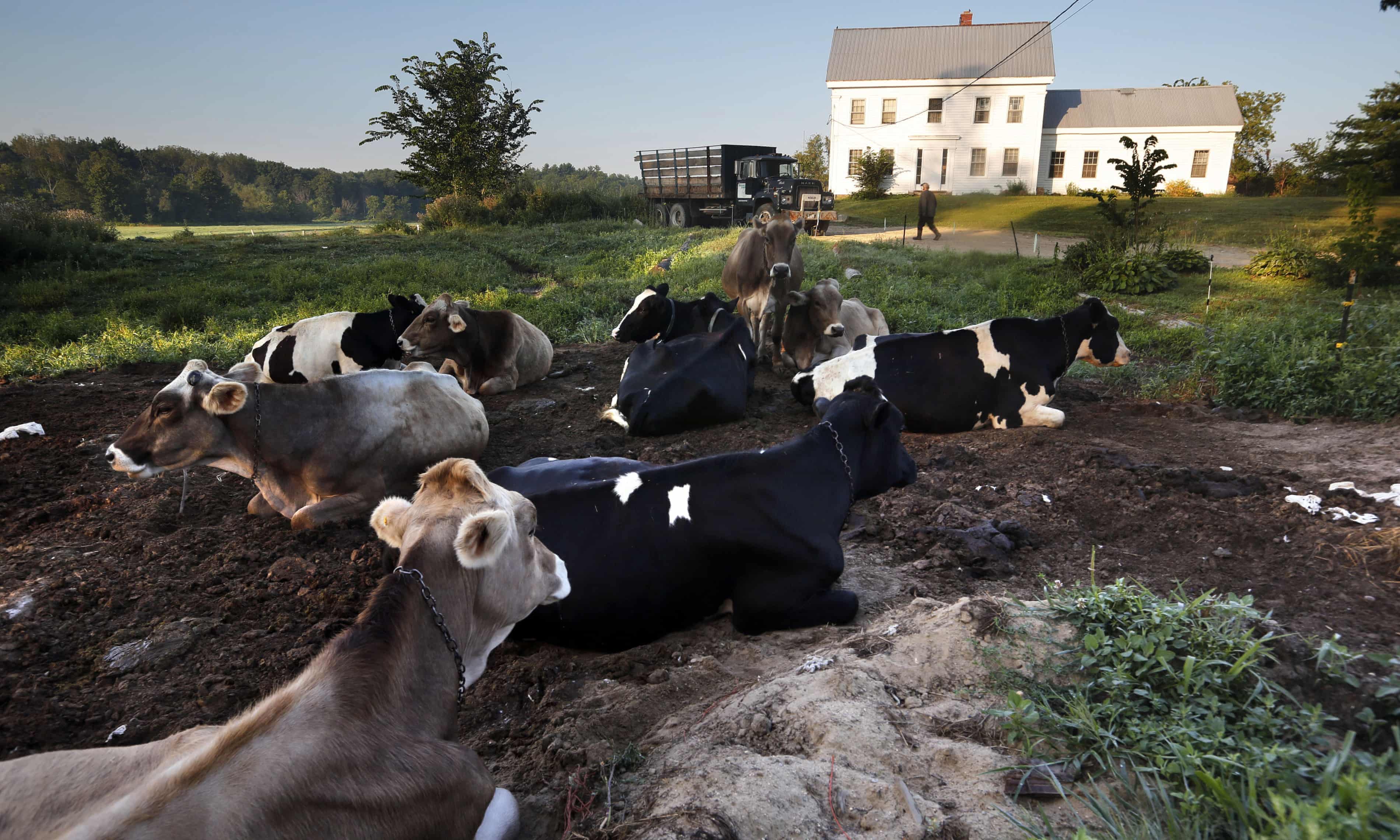
S.C. residents raising a stink over Charlotte’s sewage sludgeBy Bruce Henderson Charlotte’s export of sewage sludge to rural South Carolina has made it a target of neighbors who say the stuff is making them sick. A University of North Carolina study published last week supported their claims. It found evidence that sludge used to fertilize farm fields can be unhealthy for people who live up to a mile away. Read more here: http://www.charlotteobserver.com/2013/03/16/3919752/sc-residents-raising-a-stink-over.html#storylink=cpy
Study: Sludge-Based Fertilizer May be Causing Human IllnessesCHAPEL HILL, NC —Treated municipal sewage sludge—the solids from sewage treatment—may be causing illness in people up to a mile from where it is spread on land. Those are the findings from researchers at the Department of Epidemiology at the University of North Carolina’s Gillings School of Global Public Health. The study, titled “Land Application of Treated Sewage Sludge: Community Health and Environmental Justice,” appears in the journal Environmental Health Perspectives. It involved residents from Virginia, North Carolina and South Carolina who live near fields where sludge is applied as a soil amendment. More than half of the people interviewed reported acute symptoms such as burning eyes, nausea, vomiting and diarrhea after sludge had been sprayed or spread. Neighbors of fields where industrial swine operations spray waste have reported similar symptoms. “Study participants told us that the onset of the symptoms occurred while the sludge was being applied or soon after,” says Amy Lowman, MPH, research associate in epidemiology, and the study’s first author. “These were not one-time incidents, either. Respondents reported these illnesses occurring several times, and always after treated sludge was applied to the nearby farmland.” Other symptoms reported by more than one respondent in the wake of sludge applications included difficulty breathing, sinus congestion or drainage, and skin infection and sores. Respondents also reported sludge run-off into local waterways and cattle grazing on fields soon after sludge applications. “Both of these situations are against state rules. If there is run-off of treated sludge there can be contamination of waterways or neighboring property,” Lowman says. “Livestock are not supposed to graze on sludge-applied fields for 30 days after application.” In addition, all three states require signs warning that treated sewage sludge is in use on farmland, but several respondents reported that such signage was either not posted or not visible. Study coauthor and principal investigator of the research, Dr. Steve Wing says, “Most people in towns and cities don’t know where their sewage sludge goes. If they had to live near where it is being spread out, they might be more concerned about this practice. Many respondents in our study said it’s not fair for rural people to bear the burden of urban waste disposal.” Lowman does caution that the study’s findings are based on a relatively small sample size of 34 people and that better tracking of sludge applications and human health is needed to better document relationships between the sludge application and illness. “However, we are talking about a material containing chemicals and organisms that can make people sick. Although the EPA promotes land application of sludge, it has not said it’s safe for people’s health or the environment,” she says. “More than half of the people interviewed reported similar symptoms. These reports came from individuals in three different states on separate occasions who live up to a mile from areas where sludge was applied. These findings are consistent with previous reports of health impacts and support calls for health and environmental agencies to pay more attention to the potential for sludge to impact people who live near land application sites.” Contact: Amy Lowman, Department of Epidemiology, UNC School of Public Health, CB# 8050, Chapel Hill, NC 27599-8050 Tel: (919) 966-1306.
"Don't Ask, Don't Tell": Concerned Citizen Uncovers Whole Foods' Policy on Selling Food Grown in Sewage Sludgeby Rebekah Wilce — December 18, 2012 - 8:57am Don't fancy the thought of your spinach and carrots being grown in sewage sludge? Neither does Mario Ciasulli, a semi-retired electrical engineer living in Chapel Hill, North Carolina. Mario likes to cook, and enjoys good food. When he found out last year about the practice of spreading dried and heated human and industrial waste as "fertilizer" on food crops, he was upset. Certified organic food cannot be grown in sewage sludge -- or "biosolids," the Orwellian PR euphemism used by the sewage sludge industry. But sometimes the vegetable Mario needs for a dish isn't certified organic, or he can't afford the higher price of the organically grown version. Until he found out about sludge, he thought that as long as a "conventionally" grown fruit or vegetable he used wasn't one of the "dirty dozen" for pesticide residues, he had nothing to worry about. Sewage sludge is created by all of the human waste flushed down the toilet and sinks -- which includes all the pharmaceutical residues the men, women, and children in the city using the sewage system use -- and all the material corporations flush down the drain, which can include industrial materials, solvents, medical waste, and other chemicals. The water is removed from the sludge, and it is heated to kill certain bacteria, but the heating of the sewage sludge does not remove metals, flame retardants (which California recently listed as a carcinogen, or cancer-causing agent), and other chemicals that remain in the sewage sludge when food crops are grown in it. Some Things Never ChangeWhen I graduated from high school and came to the University of Georgia (UGA) in 1966, Chester Davenport had just become the first African-American law student to graduate from UGA. Two years later, I took a part-time job at the "Water Lab" on College Station Road, which was under the U.S. Department of Interior. My favorite duty was going on field trips to sample rivers in North Georgia. A lab tech named John worked in my section. Whenever we stopped to get drinks and snacks, John would sit in the car. It was many years later when I asked one of the supervisors why that was. "Because blacks weren't welcome back then," I was told. It had never entered my mind. I wasn't raised that way, and neither were my children. John passed away a number of years ago, and I still miss him. In 1970, Congress created the U.S. Environmental Protection Agency (EPA). Its first priority was to clean up America's polluted waterways. Our lab became part of EPA's Office of Research & Development. I earned a bachelor's degree in microbiology at UGA in 1971, and continued on to get my Ph.D. in ecology. EPA gave me a permanent position as a research microbiologist, and I had my own laboratory. Becoming a scientist and having my own lab was everything I dreamed of since I was a small child. To clean up the water, President Jimmy Carter undertook the Nation's largest public works program, which was to build sewage treatment plants in every city and town across America. Their purpose was to remove toxic pollutants from the water and concentrate them in sewage sludge, mainly for disposal in landfills. When President Carter announced the program to Congress in 1977,2 he warned: "We need to be sure that sewage projects supported by Federal money do not create additional environmental problems…We also must ensure that the systems are operated properly…that there is an effective pretreatment program to remove harmful industrial wastes from these systems; and that we are carefully considering alternative solutions…" Shortly after President Bill Clinton began his first term in 1993, EPA passed the 503 sludge rule over the objections of scientists at EPA laboratories across the county. The rule allowed cities to just treat their sewage sludge with lime, or by other processes that do nothing to remove heavy metals and persistent organic chemicals. The toxic sludge could then be spread on farms and forests and school playgrounds as “fertilizer.” Natural LawFrom Rural Pennsylvania to South America, a Global Alliance is Promoting the Idea that Ecosystems Have Intrinsic Rights By Jason Mark Cathy Miorelli doesn’t think of herself as an environmentalist. When Miorelli decided to run for the city council of Tamaqua Borough – a small town in central Pennsylvania where she has lived her entire life – she didn’t have any sort of eco-agenda. It was 2004, and the hottest controversy in Tamaqua involved a proposal by an outside company to dump sewage sludge and coal fly ash into abandoned mining pits on the edge of town. But the main issue on Miorelli’s mind was creating more transparent governance on the council, which she says had long been dominated by an old boys’ network. “I was just concerned about everything overall, not really so much the environment,” says Miorelli, who has worked for 16 years as the nurse at the Tamaqua high school. “You know, I didn’t run on any kind of platform, saying that I was going to change the world here or anything.”
She did change the world, though. Halfway through her one-term stint on the council, Miorelli spearheaded the passage of an anti-sewage sludge ordinance that included a provision recognizing the rights of “natural communities” to flourish – the first law of its kind in the world. The Tamaqua Borough ordinance inspired dozens of other communities in Vermont, Massachusetts, and Pennsylvania – including the city of Pittsburgh – to adopt similar rights of nature laws. Those ordinances then helped influence the people of Ecuador to put legal rights for ecosystems in that country’s new constitution. The idea that nature, just like people, possesses inalienable rights has percolated up to the United Nations, which has considered a proposal to adopt a “Charter on the Rights of Mother Nature.” Williamson County (Texas) landowner nixes application to bring sewage sludge to Granger farm
Updated: 11:42 p.m. Wednesday, April 25, 2012 Treated sewage sludge will not be dumped on a northeastern Williamson County farm as nearby residents had feared after the landowner canned an agreement that would have brought human-made leftovers from a nearby wastewater treatment facility to his pastures. Synagro planned to deliver sludge — also known as biosolids — from a sewage treatment plant in Waller County, but the Houston-based company pulled its permit application this week. The move came after landowner Jim Schwertner sent a letter last week notifying the Texas Commission on Environmental Quality, the state's environmental agency, that he was no longer interested in using the sludge on his farm. Lisa Wheeler, a spokeswoman for the environmental agency, said the agency has not received Synagro's notice yet. Residents around Schwertner's farm, just east of Granger, had spoken out against the potential dumping of the sludge on the piece of farmland, saying they were worried it could contaminate their well water and the air around the farm. City wants to bury federal sludge claim
Originally created 10/22/99 By Staff Writer Claims that sewage sludge used as fertilizer was actually hazardous waste emerged too late to be considered in two pending federal lawsuits, a lawyer representing the city of Augusta argued Thursday. Jim Ellison, who is defending Augusta against lawsuits by two farms claiming sludge poisoned their land and cattle, asked that portions of an Aug. 12 report by plaintiffs' consultant William Hall be suppressed. |
NewsMay 23, 2013 The Sewage Sludge Action Network has become involved in helping parents and concerned citizens in Alamance County, North Carolina to halt spraying of sewage sludge adjacent to elementary schools. With reports of higher than normal student illness and absenteeism rates, the practice needs to stop. The City of Burlington and the Alamance County Board of Education have been put on notice having been provided ample scientific evidence to suggest a causal relationship. To not act in protecting children from being exposed to the dangerous chemicals and pathogens contained in sewage sludge constitutes nothing less than willful negligence. What You Can DoWhat You Can Do [PDF] Mailing ListTo receive alerts, news and information from the Sewage Sludge Action Network, please join our mailing list. Search |