Abstract
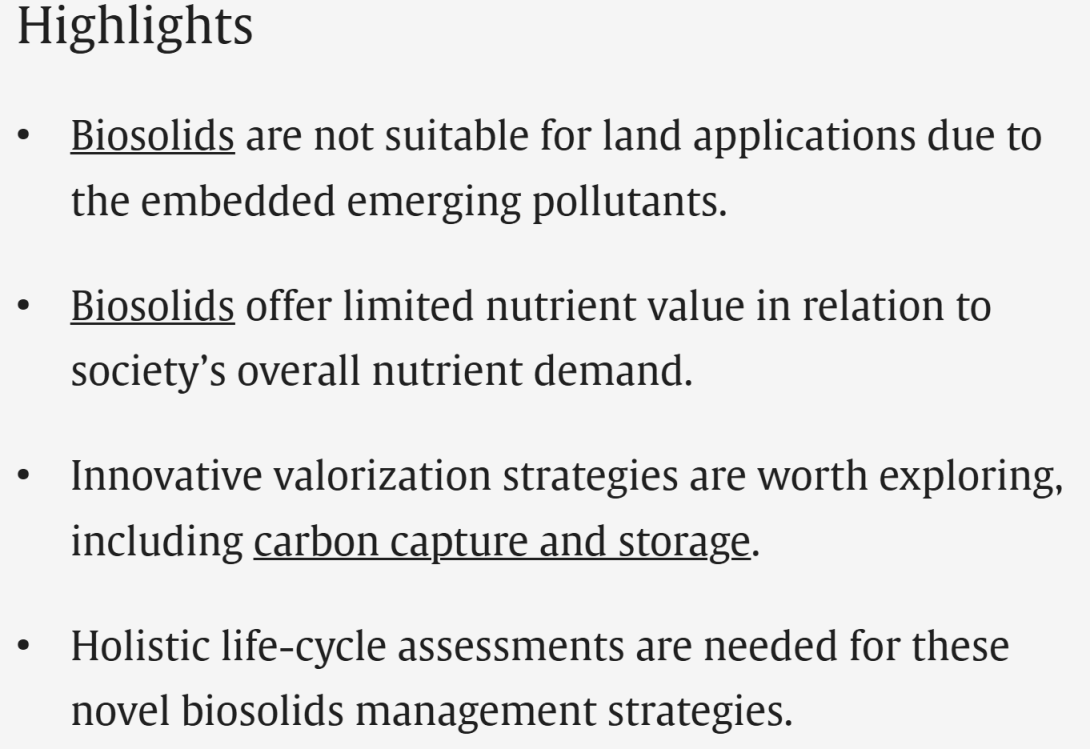
Biosolids are a byproduct of wastewater treatment with potential value because of their rich nutrient, organic matter, and mineral content. However, due to the environmental and public health risks posed by contaminants, such as per- and polyfluoroalkyl substances (PFAS), micro-/nano-plastics (MNPs), and antibiotic resistance genes (ARGs), the conventional practice of applying biosolids to land, especially on agricultural lands, can be unsustainable. These contaminants can accumulate in soil, disrupt ecosystems, and pose long-term risks to food safety and human health. Through the lens of a circular economy, biosolids should be valorized through holistic and sustainable approaches that prioritize both environmental protection and resource recovery. Advanced technologies, such as anaerobic membrane bioreactors, pyrolysis, and hydrothermal liquefaction, can extract valuable resources, such as energy and bioplastics, while also destroying harmful contaminants. In addition, biosolids and biosolids-derived biochar hold untapped potential for carbon capture and storage (CCS), offering a sustainable alternative to land applications while also helping mitigate climate change. Hence, a circular economy approach not only minimizes waste and reduces environmental impacts but also unlocks an important potential of biosolids as a renewable resource moving forward.